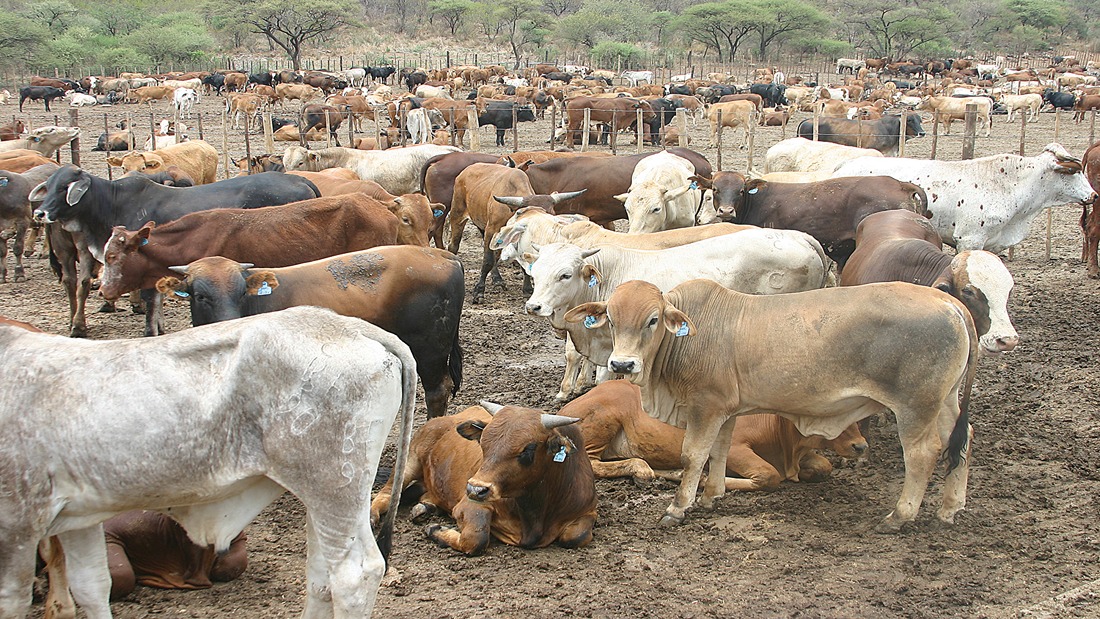
Botswana has called for stronger cross border cooperation with Namibia to contain foot and mouth disease (FMD), warning that outbreaks threaten not only livestock production but also household incomes, businesses and regional trade. A councillor in Botswana’s Charleshill District, Kealeboga Patrick Gaebuse,told the Bank Windhoek Agriculture Series 2026 that disease control must go beyond veterinary services to include local authorities, traditional leaders, farmers’ associations and businesses affected by movement restrictions.
Charleshill borders Namibia’s Omaheke Region and the Mamuno border post on the Trans Kalahari Corridor lies within the district. Botswana recorded an outbreak in the north east early in 2026, which spread to Zone 11 at Ramatlabama in April and later to Zone 13 in the Kgalagadi. In Namibia, FMD was confirmed in the Karasburg district on 23 September. Charleshill remains free of the disease, but the restrictions imposed to contain it are affecting economic activity there. Gaebuse said the ban on moving cloven hoofed animals and their raw products is only the beginning of the disruption . Farmers still face costs for feed, wages and loan repayments while cut off from markets and transporters, traders, butcheries and informal food vendors, including kapana businesses, also suffer. Citing Namibia Agricultural Union president Thinus Pretorius, he said FMD can ruin a farm financially even when it does not kill livestock.
Gaebuse said the effectiveness of restrictions depends on the cooperation of farmers and affected communities. Farmers need to understand the reasons for movement bans, permit systems should be accessible and information should come through trusted community leaders. He warned that farmers who face losing their livelihoods when an animal tests positive could be tempted to hide infections or move sick animals illegally, and proposed emergency relief and fair compensation linked to disease reporting and record keeping to encourage compliance.
He called for cooperation to reach border communities and not stay confined to national governments, and proposed five measures. They are a direct alert system between veterinary offices on both sides of Mamuno, a joint programme to inspect and maintain the shared border fence, pre agreed emergency vaccine reserves for border areas, common protocols that let disease free zones and compartments keep trading safely and a cooperation forum between Charleshill District and the Omaheke Region bringing together local authorities, traditional leaders and farmers’ associations. Preparedness, he said, must begin before another outbreak, backing the Namibia Agricultural Union’s call to divide the country into disease control zones. An outbreak may begin with one infected animal, he warned, but its consequences can spread across households, businesses and borders. “Prevention costs millions but outbreaks cost billions,” concluded Gaebuse.