GABORONE – The Government of Botswana is aggressively accelerating its economic diversification agenda, positioning the agricultural sector as the primary engine to shield the national economy from the volatility of global diamond markets. Under the Botswana Economic Transformation Programme (BETP), the landlocked nation aims to triple agriculture’s contribution to Gross Domestic Product (GDP) from a modest 2% to 6%. This strategic shift marks a departure from a decades-long reliance on mineral extraction toward a robust, value-added agro-industrial model designed to slash a ballooning food import bill and tap into high-value export corridors.
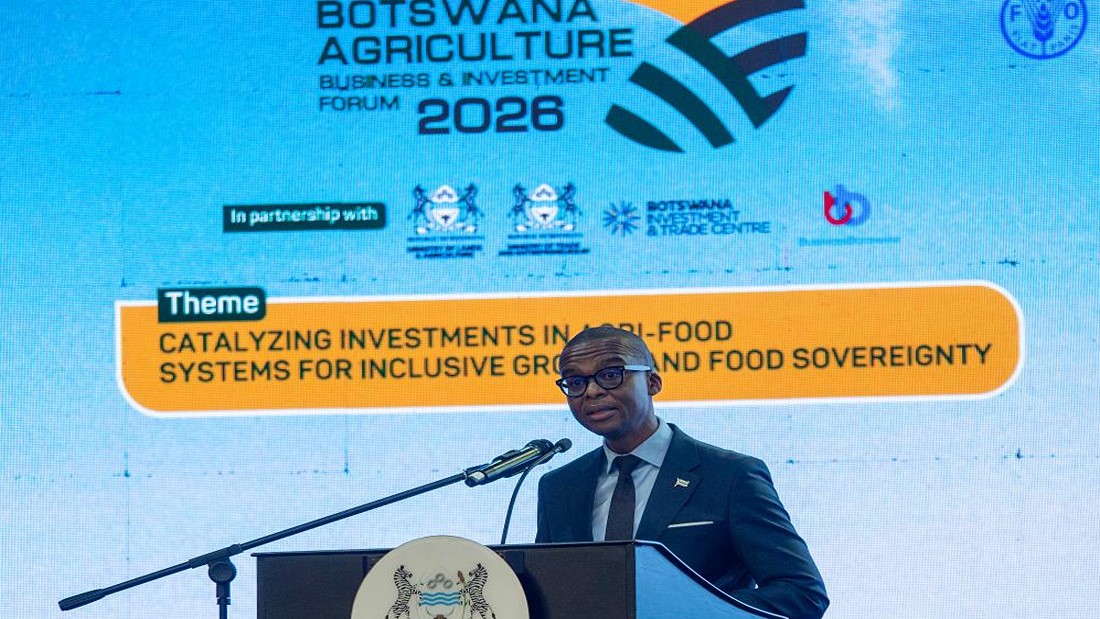
The capital intensive roadmap focuses on transitioning from primary subsistence farming to sophisticated industrial integration. Speaking at the recent Agri-Business and Investment Forum, Vice President Ndaba Gaolathe underscored that the strategy is built upon three competitive pillars: meat processing, large-scale crop production, and the emerging nutraceuticals market. By leveraging Botswana’s established reputation in the beef industry, the government seeks to foster inclusive growth that specifically integrates youth and women into the modern value chain, thereby stimulating rural economic activity that has historically lagged behind the urban mining hubs.
“Rather than focusing solely on primary production, Botswana is prioritizing agro-processing and industrial integration as central pillars of its agricultural transformation,” Gaolathe noted during the forum. He emphasized that the revitalization of the sector is not merely about food security, but about creating a “diversified growth engine” capable of withstanding commodity fluctuations. This industrial push is intended to transform raw agricultural outputs into refined, export-ready goods, effectively capturing more of the value chain within domestic borders.
However, the transition to an export-led agricultural economy faces significant structural hurdles, particularly regarding international compliance and quality assurance. Keletsositse Olebile, Chief Executive Officer of the Botswana Investment and Trade Centre, has cautioned that the lack of technical certification remains a bottleneck for local producers eyeing global markets. To bridge this gap, the BETP is expected to funnel investment into enhanced technical support and rigorous safety standards, ensuring that Botswana’s products meet the exacting requirements of European and regional trade partners.
The success of this pivot will ultimately depend on the private sector’s ability to adopt modern farm technologies and the state’s capacity to provide a stable regulatory environment for agribusiness. As the diamond industry faces headwinds from lab-grown alternatives and shifting consumer sentiment, Gaborone’s commitment to “non-diamond” sectors is being viewed by analysts as a critical survival strategy. By fostering a resilient agricultural ecosystem, Botswana is laying the groundwork for a more balanced economy that empowers local communities while strengthening national self-sufficiency in an increasingly uncertain global trade landscape.