Botswana’s government has made an unusually blunt admission that decades of subsidies, grants, infrastructure spending and drought relief have not produced the agricultural transformation the country paid for and it’s now rebuilding its entire farm-financing model from the ground up.
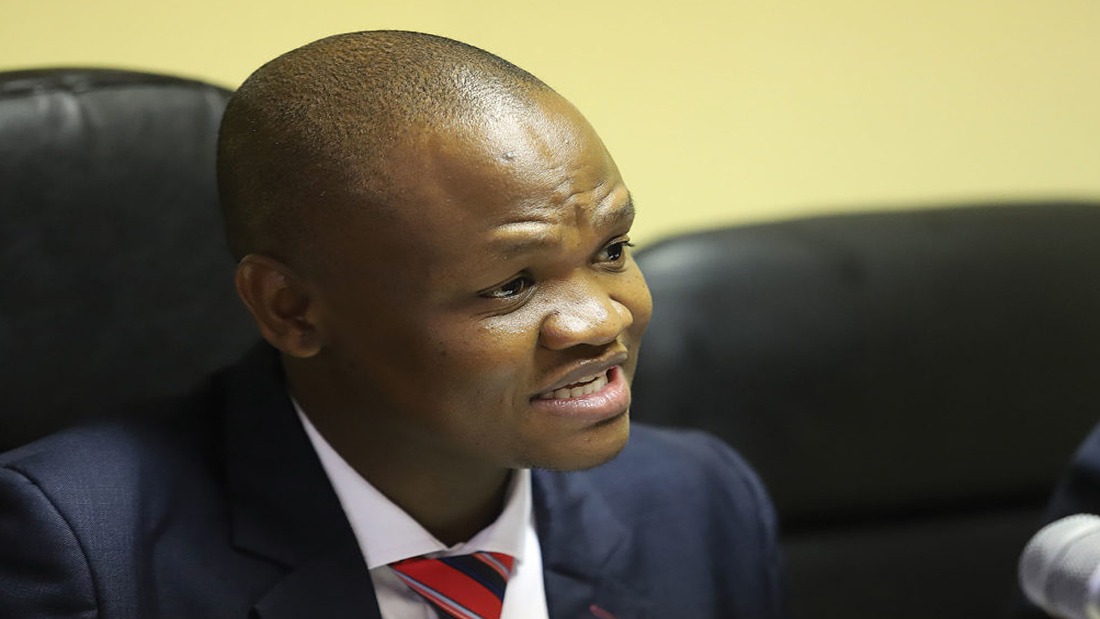
The admission came at the Botswana Agriculture Financing Strategy Consultation Workshop, where Minister of Lands and Agriculture Edwin Dikoloti acknowledged that years of support programmes such as subsidies, mechanisation schemes, livestock support and drought relief have failed to deliver the productivity gains needed to transform the sector. The workshop forms part of the development of Botswana’s first-ever National Agriculture Financing Strategy, a framework aimed squarely at fixing how agriculture gets funded, not simply how much it receives.
Dikoloti was unusually direct about the gap between investment and outcome. “There comes a point in every nation’s development journey when difficult truths must be acknowledged. One of those truths, is that while Botswana has consistently invested in agriculture, it has not always financed the sector in a manner that promotes growth, innovation, competitiveness and long-term sustainability,” said Dikoloti. He went further in quantifying the disconnect. “The truth is we have invested. We have subsidised. We have built infrastructure. We have introduced programme after programme. The issue is whether those investments have consistently translated into production, productivity and profitability. Looking at where we stand today, the answer is no.”
The core critique centres on what the money was actually financing. Dikoloti argued that support has traditionally concentrated on inputs such as equipment, subsidies, operational support without equal emphasis on productivity, market access, profitability or value addition, producing a system where success is measured by spend rather than impact. He noted, “We have financed activities rather than value chains. We have measured expenditure rather than impact. Substantial public resources have been invested over many years without producing the transformational outcomes required to build a competitive and commercially viable agricultural sector.”.
Dikoloti’s assessment lines up closely with recent comments from the Bank of Botswana. Deputy Governor Kealeboga Masalila put the same problem in blunter terms at a recent economic briefing, “Look at agriculture, the government invests billions in expenditure to support a lot of programmes but where is the yield? Who really is to blame here? We need to have honest conversations about our productivity as a country.” Masalila noted that farmer complaints about narrowed input subsidies obscure a deeper capacity problem, saying, “People right now are complaining about being given inputs for a hectare in the past ploughing season but the truth is the government is financially incapable of even providing that hectare input supply. We need to be honest with ourselves. How much was the input generated when the government was providing support for over 10 hectares?”
He extended the critique beyond government spending to how economic agents use the support they receive. “We need to question our productivity as a country. We have failed to turn government support into tangible output that leads to self-sufficiency. Our discussions with the government recently have centred on uncomfortable truths about what the government can and cannot do,” added Masalila.
The persistent gaps, limited access to finance, climate risk, thin private-sector investment and weak value-chain integration have kept Botswana dependent on food imports despite years of public spending aimed at boosting domestic production. In response, the government is developing the National Agriculture Financing Strategy with technical and financial support from the UN’s Food and Agriculture Organization (FAO), built around a shift from input-based subsidies toward productivity-driven financing that rewards results and competitiveness.
The proposed framework leans on blended finance mechanisms, climate financing solutions, risk-sharing arrangements and greater participation from commercial banks, investors and development finance institutions, betting that transformation will come from stronger collaboration across government, financial institutions, investors, researchers and farmers rather than from public expenditure alone. The stated ambition: move agriculture from subsistence to commercialisation, from fragmented interventions to integrated value chains and from dependence on government support to a genuinely investment-ready sector.