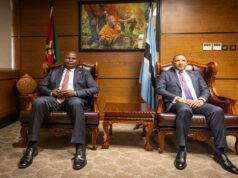
During the Botswana Agriculture Business and Investment Forum held recently in Tlokweng, Vice President and Minister of Finance Ndaba Gaolathe delivered a compelling call for a nationwide shift toward agricultural investment.
He articulated a vision where the sector serves as a primary engine for economic diversification, moving the country away from its historical reliance on diamond mining. By expanding local production, the government aims to drastically reduce the national import bill while simultaneously boosting export revenues through the development of high-value, processed goods.
The Vice President highlighted several strategic sectors poised for growth, including meat processing, crop production, and the emerging field of nutraceuticals. He urged stakeholders to direct capital into essential infrastructure such as seed production, controlled-environment farming, and freshwater fisheries. This industrial push is backed by a concrete economic target: the government intends to triple the agricultural sector’s contribution to the gross domestic product, raising it from a modest 2 per cent to a robust 6 per cent.
International and domestic leaders echoed this sentiment, emphasizing the need for technical excellence and global competitiveness. Carla Mucavi of the Food and Agriculture Organization noted that sustainable value chains are essential for accessing foreign markets, while Keletsositse Olebile of the Botswana Investment and Trade Centre pointed out that meeting international certification standards remains a hurdle for many local producers. The forum, which attracted over 400 participants, served as a critical platform for turning these high-level policy goals into tangible, bankable projects.
Reflecting on the urgency of this economic transition, Ndaba Gaolathe stated: “Expanding agricultural production is critical to reducing the national import bill and increasing export earnings through value-added products.”