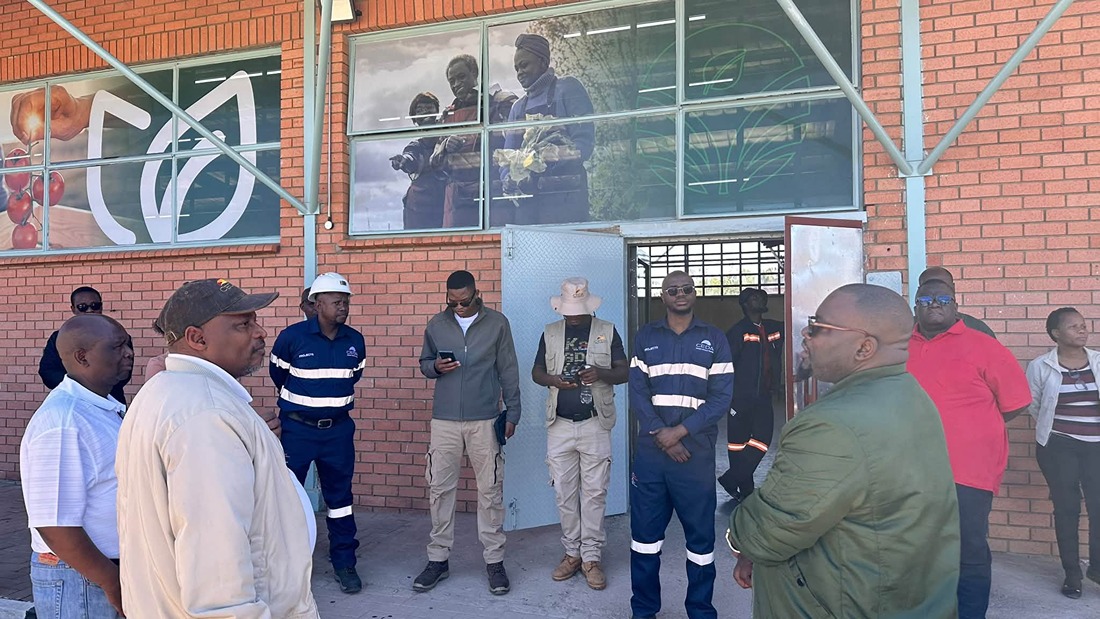
Botswana is changing the commercial logic behind the Letsema Horticulture Market after acknowledging that infrastructure alone could not create a functioning agricultural market. The government has conceded that the original model was built largely around supply and physical infrastructure rather than confirmed demand. The rethink now places buyers, market access, digital systems and private sector participation much closer to the centre of the model.
Assistant Minister of Trade and Entrepreneurship Baratiwa Mathoothe told Parliament that the original concept assumed that a trading floor, cold storage and logistics facilities would be sufficient to attract producers and buyers. That model placed Letsema in the difficult position of purchasing produce from farmers and reselling it to buyers while carrying much of the commercial and inventory risk.
The market also struggled with limited procurement access, a concentrated buyer base and weak negotiating power over prices. At the end of the 2025/26 financial year, 355 farmers were registered as suppliers, but limited regional reach and the absence of structured off take arrangements continued to constrain volumes. The government’s response is a three phase strategy aimed at turning Letsema into a national horticulture system rather than a single market facility.
The first phase, the Gaborone Horticulture Market Centre, is already operational. The second will establish regional collection centres with cold storage, sorting and grading facilities linked to the main market through refrigerated logistics. The third phase is intended to integrate the value chain digitally and introduce services such as pre packing, branding and G.A.P certification, with export markets targeted across SADC, the European Union under the Economic Partnership Agreement and AfCFTA.
Mathoothe said the rethink was informed by market benchmarking and operating model analysis, as well as engagement with private sector operators, buyers and investors. The commercial lesson is straightforward. The government cannot indefinitely carry agricultural market risk. Letsema’s next phase is therefore being designed around a facilitator model that can bring producers, buyers, logistics providers and investors into a functioning market system.
Mathoothe said LHM was “transitioning from a single building to a national market system” and that with Phase 2 infrastructure, digital systems, regulated agents and private sector partnerships, the government was positioning the market to reduce imports, increase farmer income and create jobs. That shift could prove more important than the physical infrastructure itself. Botswana’s horticultural challenge has never simply been about producing more. It is about creating a reliable commercial route between farms and consumers.