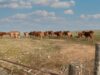
South Africa and Botswana have agreed to a comprehensive three-year action plan to combat Foot and Mouth Disease (FMD) along their shared border, mapping out an aggressive biosecurity framework designed to protect rural economies and unlock stalled agricultural trade.
The 2026–2028 Action Plan, endorsed during the Sixth Session of the South Africa-Botswana Bi-National Commission in Gaborone, marks a shift toward unified regional disease management. The strategy relies heavily on synchronized cross-border vaccinations, shared diagnostic technology, and the strict rehabilitation of frontier fencing to halt the spread of the highly contagious livestock virus.
“With FMD posing an ongoing regional threat to livestock production, rural livelihoods, and agricultural trade, it is clear that no country can defeat this disease in isolation,” South African Minister of Agriculture John Steenhuisen said in a statement.
The economic stakes are high for both nations, where beef production and livestock farming form the backbone of rural commerce. Transboundary animal diseases frequently trigger sudden export bans, disrupting supply chains and costing millions in lost revenue. As part of the new framework, the neighbors will deploy targeted interventions across critical border corridors, focusing heavily on the Lobatse-Mahikeng and Francistown-Musina trade routes.
For Steenhuisen, the physical infrastructure of containment is paramount. “The old saying tells us that good fences make good neighbors, but in the face of FMD, strong and properly maintained border fences help protect the livestock industries, livelihoods, and agricultural economies of both our nations,” he said. “Securing our borders is not about division. It is about building a coordinated regional biosecurity system.”
The bilateral pact also takes aim at a secondary crisis plaguing border communities: rampant stock theft, which law enforcement agencies from both states now classify as their primary cross-border crime. To curb the illicit trade of stolen cattle which serves as a major vector for spreading disease unchecked the nations will launch a joint Stock Theft Management Task Force by September 2026. The task force will lean heavily on modernized animal traceability systems to monitor movement, verify ownership, and isolate outbreaks faster.
The timing of the deal is strategic. Steenhuisen is set to chair the upcoming Southern African Development Community (SADC) Agriculture Ministerial Meeting in Zimbabwe, where he intends to use the South Africa-Botswana agreement as a blueprint for a bloc-wide biosecurity overhaul.
“One of the clearest lessons from countries in Southern America that have successfully controlled FMD is that regional coordination is essential,” Steenhuisen said, adding that the ultimate milestone for Southern Africa will be the establishment of a regional antigen bank to rapidly deploy vaccines during emergencies.
The diplomatic breakthrough comes amid simmering trade tensions between the two neighbors. South Africa has grown increasingly vocal about unannounced border restrictions imposed by Botswana on its agricultural exports, which Pretoria argues violate previous bilateral trade understandings.
To prevent localized trade disputes from escalating into broader economic friction, the commission formalized a new communication protocol and will establish a Bilateral Agricultural Trade Task Team. The specialized unit is tasked with dismantling non-tariff barriers and ensuring that future regulatory changes are transparently communicated well before border gates are closed.